 Orovia
- 01
Renders high-quality 3D views of dental cases instantly
- 02
Lets technicians, dentists, and clients review and mark up designs together
- 03
Records feedback and approval history directly on the 3D model
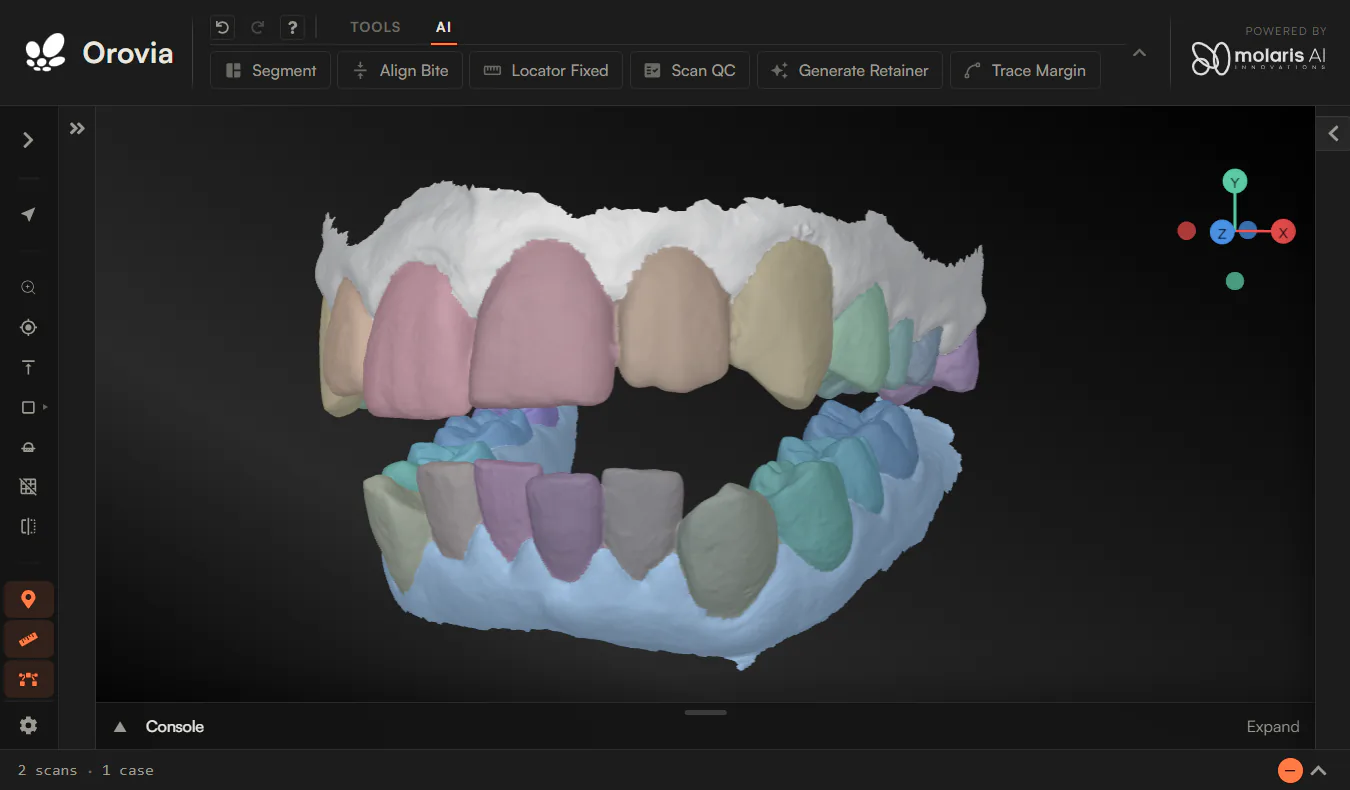
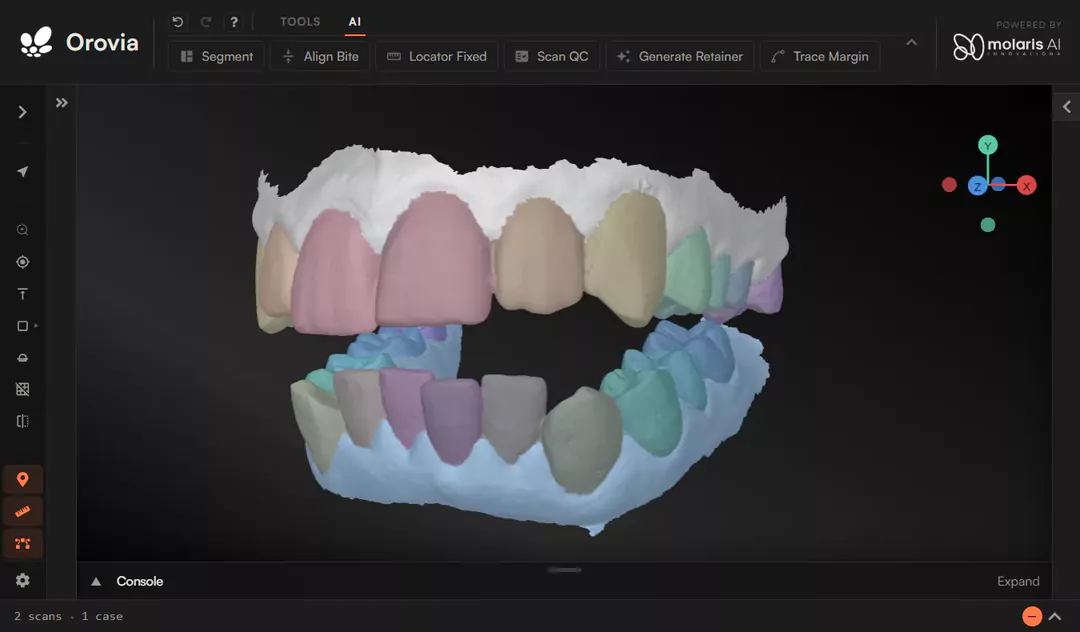
To ordinary software, a dental scan is a cloud of triangles. To Orovia, it's a patient: named teeth with neighbors and margins, two arches with a bite, a prep with a purpose. Our deep learning models are trained specifically on 3D dental anatomy, and that understanding powers everything the product does.
The AI engine
Automated scan quality control
Every scan is screened at intake for the failure modes that cause remakes: incomplete capture, distortion, stitching artifacts, unreadable margins, insufficient clearance. Problems route back to the chairside while the patient may still be there.
Tooth-level segmentation
Each tooth identified and labeled. The mesh becomes structured, queryable anatomy, the primitive that targeted QC, smarter design, and future capabilities are built on.
Margin intelligence
Automatic margin proposals with honest uncertainty: where the line is clear, it's drawn; where it isn't, the region is flagged for human judgment, or a precise rescan request.
Occlusion & articulation analysis
AI-driven analysis of how the arches relate: bite alignment verified, occlusion problems surfaced digitally, before they surface clinically.
AI-assisted design
Generative proposals grounded in the patient's own dentition, refined by your technicians, and refined by every case the system processes.
Collaborative 3D review
Everyone looks at the same model, from anywhere. Markup on the surface, approvals on the record, history on the case.
“Sending screenshots and waiting for email approvals slowed everything down. We wanted a tool where everyone could look at the same thing, at the same time, and give real feedback, right on the model. Orovia makes collaboration feel natural, not clunky.”